Haro, Rioja Alavesa or Logroño: which wine area to choose
For wine lovers, La Rioja has three classic bases, each with a personality of its own: Haro, Rioja Alavesa and Logroño. Choosing well between them, or combining them, makes the difference between a memorable winery route and one that falls a little flat. This guide compares all three to help you decide.
Quick answer
Choose Haro for a first route with historic wineries within walking distance of each other; Rioja Alavesa for landscape, walled villages and striking wine architecture; and Logroño if you are short on time or want to combine tastings with tapas. With two or three days, stay in Logroño and give each area its own day.
In a nutshell: Haro is concentrated history, Rioja Alavesa is scenery and design, and Logroño is the urban base where wine meets food. There is no single right answer; it depends on what you want from your trip. One geographical curiosity worth knowing: Rioja Alavesa is not actually in the region of La Rioja but in the Basque province of Álava, although its vineyards belong to the same Rioja designation.
At a glance
| Area | Character | Main advantage | Ideal for |
|---|---|---|---|
| Haro | Century-old wineries close together | Everything within a small radius | First visits, wine history |
| Rioja Alavesa | Landscape and modern architecture | The most photographed scenery | Design lovers and views |
| Logroño | City base with nearby wineries | Combines wine and food | Those who prefer not to travel much |
Haro: the classic choice
Haro's Barrio de la Estación (Station District) gathers some of Spain's oldest and most prestigious wineries within a few hundred metres. These houses grew up beside the railway in the late 19th century, when wine was shipped by train, and you can walk from one to the next. It is the most compact and accessible area for anyone visiting La Rioja for the first time.
Many visitors never leave the district, but nearby villages round off the day nicely: Briones, with its views over the Ebro; Ollauri, known for its underground cellars; and San Vicente de la Sonsierra, crowned by its castle. To combine several, see our Rioja Alta wine route with a driver, or book a dedicated Haro winery visit with a driver.
Rioja Alavesa: the most spectacular landscape
Laguardia, Elciego and the surrounding villages offer medieval cellars, signature architecture such as Marqués de Riscal, and views over the vineyards with the Sierra de Cantabria behind them that rank among the most photographed in Spain. The pace is slower: hillside vines, cellars beneath Laguardia's streets and wineries that are works of art.
The wineries are more spread out than in Haro. The distances between them are short, but not walkable, so plan the order of your visits carefully and travel with a driver. Our Laguardia winery visit with a driver and Rioja Alavesa wineries with a driver are designed around exactly that.
Logroño: an easy base with wineries nearby
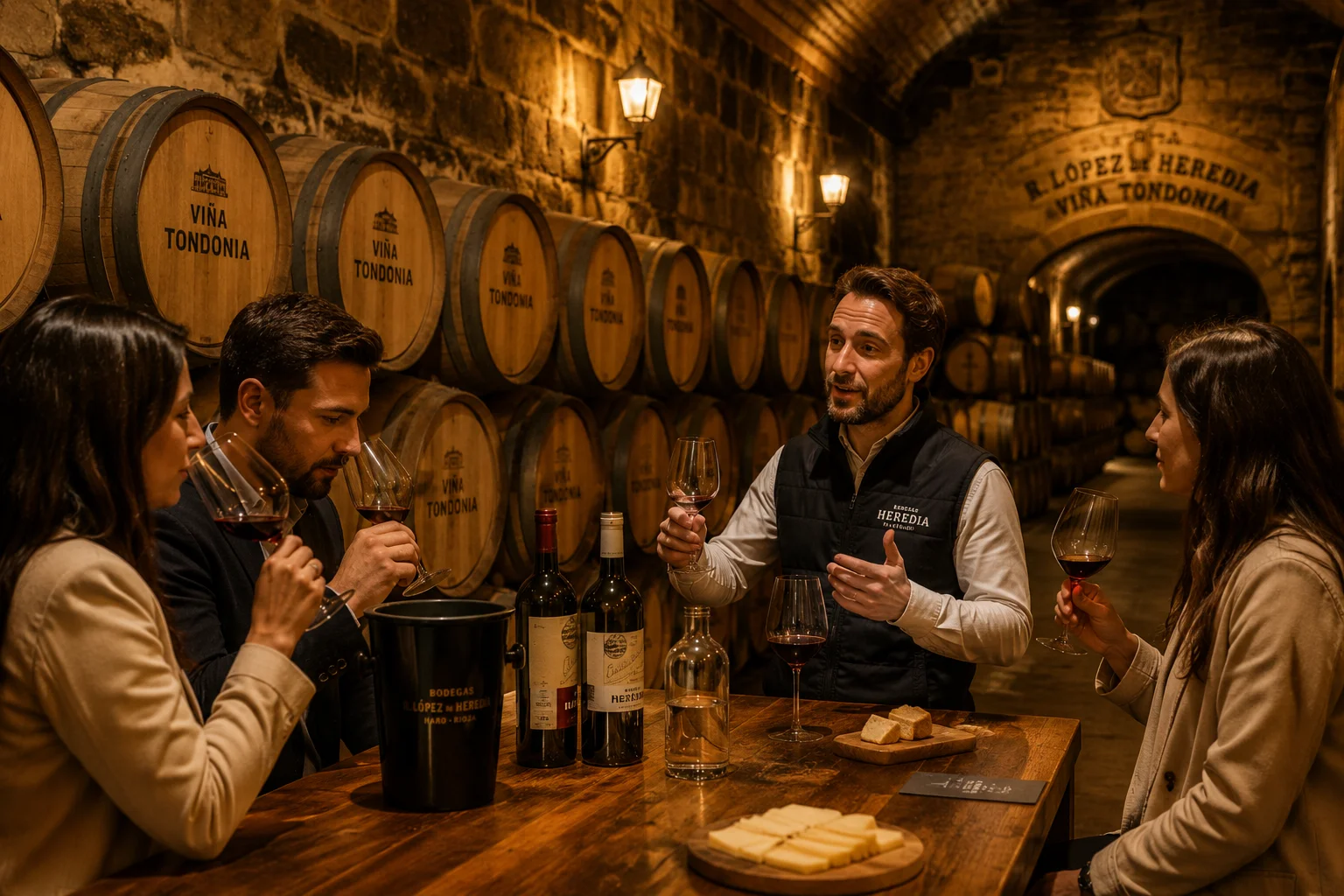
If you would rather not plan long journeys, Logroño offers wineries on its doorstep and the tapas bars of Calle Laurel in the centre. It is the most practical option if your trip also includes city sightseeing, if you arrive by train or if you only have a short break. For the wineries on the outskirts without driving, there is our Logroño winery tour with a private driver; for the evening, read our Calle Laurel tapas guide.
“You do not have to choose just one area if you have several days. Haro and Rioja Alavesa on separate days, with Logroño as your base, is the most complete way to get to know Rioja wine.”
The practical details that decide it
The first table sums up each area's character. This one gets down to practicalities: distances, the kind of day you will have and what to bear in mind.
| Criterion | Haro | Rioja Alavesa | Logroño |
|---|---|---|---|
| Distance from Logroño | About 45 km (28 miles), around 40 min | Laguardia, about 17 km (11 miles), around 25 min | In the city and its surroundings |
| Moving between wineries | On foot within the Station District | By car, between villages | On foot in the centre; by car for the outskirts |
| Typical winery | Century-old houses and great Reservas | Signature architecture, old cellars and small growers | Urban wineries, old cellars and wine bars |
| Villages to add | Briones, Ollauri, San Vicente de la Sonsierra | Laguardia, Elciego, Samaniego, Labastida | Navarrete, Fuenmayor, Cenicero |
| Where to eat | Haro's old town and local grill houses | Village restaurants and some winery restaurants | Tapas on Calle Laurel and nearby streets |
| Most convenient airport | Bilbao (about 100 km / 62 miles) | Bilbao or Vitoria | Bilbao, Vitoria, Pamplona or Zaragoza |
For a full comparison of gateways, see airports near Logroño.
Which area for your kind of trip?
- First time in La Rioja: Haro. You will understand classic Rioja and can compare several houses in one morning.
- Couples and anniversaries: Rioja Alavesa. Laguardia at sunset and a design winery make a hard-to-beat memory.
- Short break or business trip: Logroño. An afternoon of cellars and tastings without leaving the city.
- Groups of friends: Haro or Rioja Alavesa, with a van for everyone and a long lunch between visits.
- Return visitors: Rioja Oriental, the warmer eastern sub-zone known for Garnacha, or the Najerilla valley, with smaller wineries and fewer visitors.
Splitting the areas over several days
With two days, the classic combination is Haro on day one and Rioja Alavesa on day two, sleeping in Logroño. With three, add a day in the city itself or in Rioja Oriental. There is a day-by-day example in La Rioja in 3 days. Trying to fit Haro and Rioja Alavesa into a single day is possible, but you will spend more time in the car and less in the cellars.
Does the season change the choice?
Quite a lot. In spring, with the vines in leaf, Rioja Alavesa looks particularly green and long evenings let you stay in Laguardia until sunset. In summer, Haro has the edge: much of each visit takes place underground in cool cellars and the walk between wineries is short. During the harvest, from September to October, every area is spectacular, but it is also the hardest time to get a slot, so book wineries and transport weeks ahead. In winter, Logroño is the most comfortable choice, with indoor tastings and tapas in the evening whatever the weather. More detail in our guide to the best time to visit La Rioja.
Whatever the season, the underlying rule stays the same: one area enjoyed properly beats three rushed. Remember that visiting times and prices are set by each winery, so check their official website and book ahead. Our full range of winery visits with a private driver covers all three areas.
Frequently asked questions
Which area is best for a first visit to La Rioja?
Haro is usually recommended for a first visit, thanks to its concentration of historic wineries in a small area that is easy to explore without long journeys.
Can I visit Haro and Rioja Alavesa on the same day?
It is possible but not ideal if you want to really enjoy each winery. It is better to give each area its own day so you are not rushing between visits.
Why is a driver more useful in Rioja Alavesa than in Haro?
Rioja Alavesa's wineries are spread across several villages, whereas in Haro's Station District everything is close together. That makes a driver far more practical for moving between them.
Does Logroño have wineries to visit?
Yes, there are wineries and tasting spaces in and around Logroño, although they are less concentrated than in Haro or Rioja Alavesa. They combine well with city sightseeing.
How many days do I need to see all three areas?
Three full days let you give each area its own day while staying in Logroño as a central base. It is the most complete way to discover Rioja wine tourism without rushing.
Not sure which area suits you?
Tell us your dates and what you enjoy, and we will suggest the best plan. Private driver for Haro, Rioja Alavesa, Logroño or a combination.
Request a quote