
Food and drink
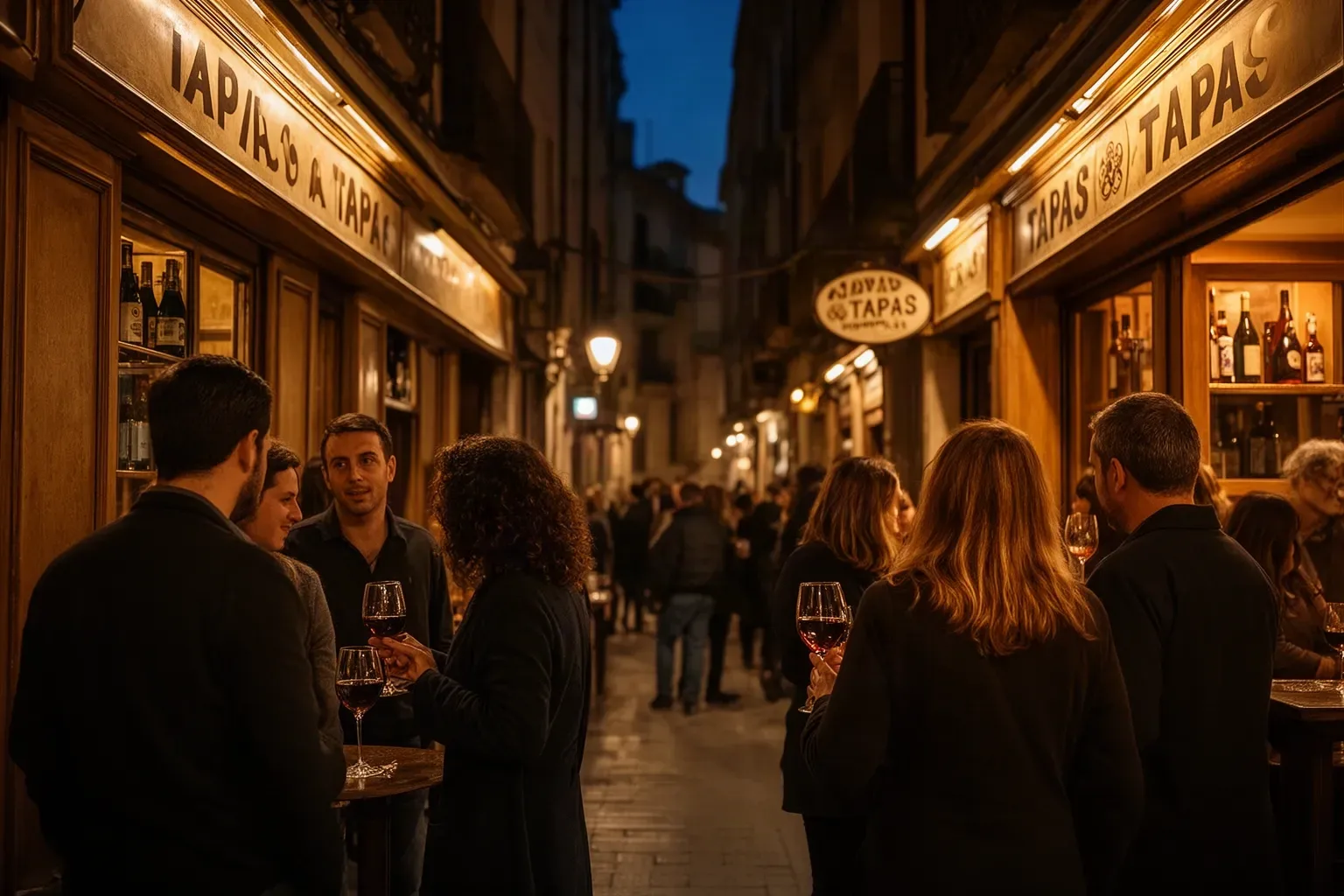
Calle Laurel, Logroño: tapas guide
One bar, one pintxo, one glass… then on to the next. The unwritten rules of Rioja's most famous tapas crawl.
Quick answer
Calle Laurel is a short street in Logroño's old town packed with bars that each specialise in one signature pintxo (bite-sized tapa). You eat standing: order the house speciality and a glass of wine, pay straight away and move on to the next bar. Calle San Juan, a few minutes' walk away, offers the same ritual with a bit more elbow room. The liveliest times are from about 8pm, and weekend lunchtimes.
If one place sums up how people in La Rioja eat and socialise, it is Calle Laurel. It is only a few hundred steps of narrow street in the heart of Logroño's old town, yet it is home to dozens of bars. Unlike the Basque bars of San Sebastián or Bilbao, where counters groan with pintxos, most bars here stake their reputation on one speciality. First-time visitors from the UK or the US tend to make the same mistake: they find a table, ask for the menu and stay all evening. On the Laurel, that is exactly what you do not do.
This guide explains how the ritual works, how Laurel differs from Calle San Juan, what to order, when to go and a few local words that will get you served at the first attempt.
Where is Calle Laurel?
The Laurel sits in the old town, between Calle Portales and the Plaza del Mercado, a stone's throw from the co-cathedral of Santa María de La Redonda. When locals say they are "going to the Laurel" they mean a small cluster of streets: the Laurel itself, the Travesía del Laurel and neighbouring lanes such as Calle Albornoz. It is jokingly nicknamed "la senda de los elefantes" (the elephants' path), a local quip about the state of some people who make it to the end.
Calle San Juan and its side street lie a few minutes' walk away, on the other side of Portales. It is the city's second great pintxo area and many locals prefer it because it is less crowded.
How the pintxo crawl works
- Walk in and see what everyone is eating. Almost every bar has a star pintxo that flies out of the kitchen. That is the one to order.
- Order one pintxo per person (or one to share) and a drink. No big plates: the idea is to visit several bars.
- Pay as you go. In most places you pay when you order or just after, which keeps things moving.
- Eat standing at the bar, or outside if the weather is kind and the bar allows it.
- Move on. Three or four stops is a normal round; the keenest do more.
Bar tip for groups: let one person order for everyone while the others find a spot. Speed is appreciated on the Laurel, and staff will return the favour with a smile. A few words of Spanish ("uno de la casa, por favor") go a long way.
What to order on Laurel and San Juan
Bars change owners, menus and occasionally names, so rather than a fixed list, here are the types of pintxo the area is known for, with some classic examples still linked to particular bars at the time of writing. Check on the spot: the best move is to ask the waiter "¿cuál es el de la casa?" (which is the house speciality?).
| Pintxo | What it is | Where you usually find it |
|---|---|---|
| Grilled mushroom (champiñón) | Three mushrooms skewered with a prawn on bread, with garlic sauce | The Laurel's emblem; Bar Soriano is the name most associated with it |
| Matrimonio | A mini sandwich of salted anchovy and white anchovy, often with pepper | A classic of long-standing bars such as Blanco y Negro |
| Patatas bravas or picantes | Potatoes with the house sauce, mild to fiery | Several bars, each defending its own recipe |
| Oreja | Pig's ear, griddled or battered | A traditional tavern pintxo |
| Modern pintxos | Creative cooking in miniature | More common on San Juan and in refurbished bars |
| Peppers, wild mushrooms and Riojan vegetables | Seasonal produce, griddled or on toast | Both streets, especially in autumn |
Laurel or San Juan: which to choose?
Calle Laurel
More intense, more touristy and more concentrated. Ideal for a first visit and for anyone who wants the time-honoured pintxos. On weekend nights and during fiestas it gets so packed that moving along can be a challenge.
Calle San Juan
A little wider, with terraces and a mix of classic bars and newer ideas. A good choice for groups, families or anyone who prefers to chat without being jostled. Many locals combine both, starting on San Juan and finishing on the Laurel, or the other way round.
When to go: Spanish eating hours
Visitors from northern Europe and North America are often caught out by Spanish meal times. The tapas scene has two shifts. The lunchtime one is calmer, roughly from 1pm to 3.30pm, especially at weekends. The evening one starts around 8pm and peaks between 9pm and 11pm. Turn up at 6pm and you may find the street half asleep. Some bars close one weekday for a rest day, and midweek evenings are more relaxed. During the San Mateo festival in September the area overflows: arrive early or expect queues.
Useful words at the bar
- Crianza: a red wine aged at least a year in oak plus time in bottle; the most common "pintxo wine". See our guide to reading a Rioja label.
- Joven or cosechero: young wine from the latest vintage, fresh and fruity, often made by carbonic maceration.
- Zurito: a small glass of beer, handy if you plan many stops.
- Mosto: alcohol-free grape juice, the classic choice for non-drinkers.
- Ronda: a round; one person pays for everyone at each bar and you take turns.
Fitting the Laurel into a short trip
The Laurel is the perfect end to a winery day: back to the hotel, a quick change and a stroll down to the old town. To learn more about what is in your glass, add a Logroño winery tour with a private driver or a Campo Viejo visit with a driver, just minutes from the centre. Our La Rioja in 3 days itinerary saves the first evening for pintxos, and if you arrive by rail, a Logroño train station transfer gets you to your hotel in time for the first round.
Staying outside the centre or in a nearby village? Book an hourly chauffeur in Logroño: your driver meets you at an agreed time near the pedestrian zone, so nobody has to drive after the wine. For more ways to get around, read getting around La Rioja without a car.
Enjoy the pintxos, we'll take you home
Pick-up near the old town and a ride back to your hotel in Logroño or any village in La Rioja.
Request a quoteWhatsAppFrequently asked questions
What is Calle Laurel in Logroño?
A street in Logroño's old town, together with its side streets, famous for its pintxo bars, each specialising in one or a few signature bites.
What is the most famous pintxo on Calle Laurel?
The grilled mushroom with a prawn on bread is the most iconic. Other classics include the matrimonio (two kinds of anchovy), spicy potatoes and pig's ear.
What is the difference between Calle Laurel and Calle San Juan?
The Laurel is narrower, busier and more traditional. San Juan has more space, terraces and more modern pintxos. They are a few minutes apart and easy to combine in one evening.
What time should I go for pintxos in Logroño?
Evenings from around 8pm, peaking between 9pm and 11pm, or roughly 1pm to 3.30pm for a quieter lunchtime round, especially at weekends.
How do I get back to my hotel after the Laurel?
On foot if you are staying in the centre. If you are outside Logroño or in a nearby village, the easiest option is a private driver who collects you at an agreed time near the old town.