
How to visit a winery in Rioja: practical guide
La Rioja offers some of the most complete wine tourism in the world: century-old cellars, cutting-edge architecture, tastings and food pairings. To get the most out of a visit, though, a little organisation goes a long way. Here is everything you need to know before you go.
Quick answer
To visit a winery in Rioja, book ahead on its website or by phone, choose the format (classic tour with tasting, pairing or vineyard experience) and the language, arrive on time in comfortable shoes and plan your return without driving. A standard visit lasts around an hour and a half to two hours and includes the winery, the underground cellars and a tasting.
If you are used to wineries in California, Australia or South Africa, where you can often drop into a tasting room, Rioja works differently. Most visits are guided, run at fixed times and need a reservation. The upside is a more personal experience, often in small groups, with time to ask questions.
Booking: essential
Very few wineries accept visitors without an appointment. Places are limited and the most popular estates fill up weeks ahead, especially in high season. Book online or by phone with several days' margin at the very least, and much more for September and October. When you book, check three things: the start time, the language of the tour and whether the format includes food.
Step by step: from booking to tasting
- Choose the area and the winery. Decide whether you want a historic house, a piece of contemporary architecture or a family-run project, and group visits in the same area.
- Book your slot. Most wineries sell tours on their website; some smaller ones prefer email or phone. Note the language and the exact start time.
- Mention anything important. If you are travelling with children, someone with reduced mobility or food allergies (for pairings), say so when booking.
- Plan your transport. Many wineries are outside the town centre; work out the journey and, if you will be tasting, make sure someone else drives.
- Arrive with time to spare. Ten minutes early is ideal: groups start on the hour and joining late is difficult.
- Enjoy the tasting and the shop. There is usually time to buy at the end. Ask whether they ship abroad if you do not want to carry bottles; rules and costs vary by country.
What a typical visit includes
A standard visit lasts roughly an hour and a half to two hours. It usually includes a walk through the vineyard or the production area, an explanation of how the wine is made, a stroll through the cellars or barrel halls where the wine ages in oak, and a final tasting of several wines.
| Format | What it usually includes | Best for |
|---|---|---|
| Classic tour with tasting | Winery and cellars, an explanation of ageing, and a tasting of two or three wines | First-time visitors |
| Guided or vintage tasting | More wines, more time in the tasting room, sometimes older vintages | Wine lovers with some experience |
| Pairing or lunch at the winery | A tour followed by a menu or tapas with the estate's wines | Celebrations and unhurried trips |
| Vineyard experience | A walk or drive through the plots, sometimes with harvest activities in season | Those who want to see the land, not just the cellar |
| Wine bar or shop, no tour | A glass or short tasting without a guided visit | Quick stops between other plans |
Times, availability and prices are set by each winery, so always check their official website.
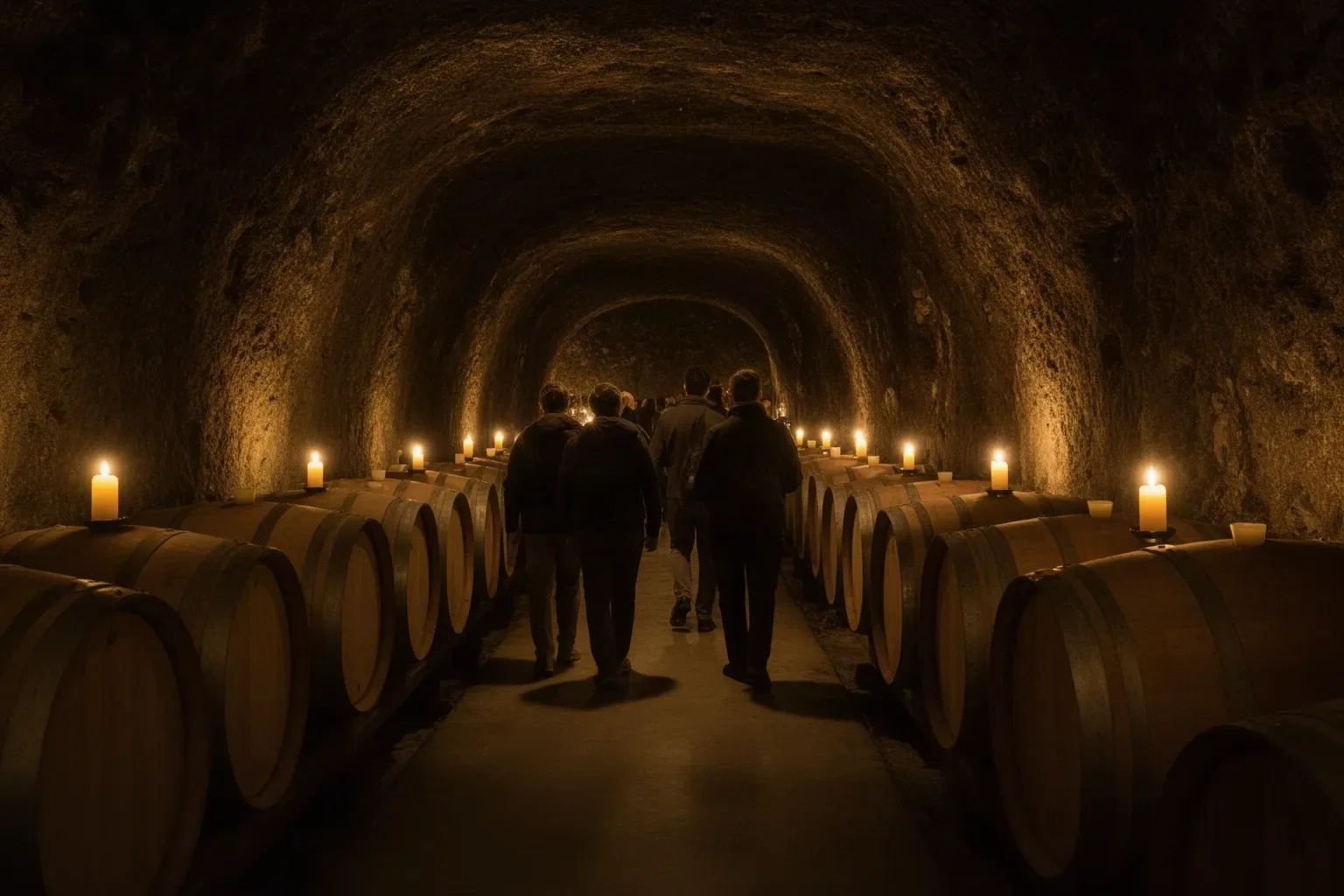
How a tasting works
You do not need to know anything about wine to enjoy a tasting: the guide leads you through it. The order is nearly always the same: look (colour and clarity), smell (aromas, first without swirling and then after swirling the glass) and taste (acidity, tannins, body and finish). Spitting is perfectly normal if you are visiting more than one winery, and almost all tasting rooms have spittoons. To arrive with a little background, read our guide to Crianza, Reserva and Gran Reserva labels and what DOCa Rioja means.
Winery etiquette
- Skip strong perfume or aftershave: it interferes with everyone's tasting.
- Ask before taking photos in production areas; in the cellars it is usually fine, but not always.
- Do not touch barrels or tanks unless the guide invites you to.
- If you do not like a wine, no problem: leave it in the glass or use the spittoon.
- Tipping the guide is not expected in Spain, although buying a bottle is always appreciated.
Children, groups and reduced mobility
Many wineries welcome children on tours (without tasting, of course), and some offer grape juice instead; confirm when booking. Groups are usually asked to book a private slot, and it helps to arrive together in one vehicle; see our group transport options. If someone in your party has reduced mobility, ask about step-free access: some historic cellars are not adapted. We can help with accessible transport in La Rioja.
What if you do not speak Spanish?
Most well-known wineries run tours in English, although at fewer times than in Spanish, so book that slot early. Our drivers speak Spanish and English, which is why travellers and agencies often choose an English-speaking driver in La Rioja to smooth the day.
How many wineries in one day?
The most common advice from people who know the region is two wineries a day: one in the morning and one in the afternoon, with a relaxed lunch in between. Three is possible if one of them is short. Any more and the tastings start to blur. For a full planning framework, see how to plan a Rioja wine route.
Example day in Rioja Alavesa
A morning in Elciego visiting the City of Wine at Marqués de Riscal, lunch in Laguardia and, in the afternoon, an old cellar beneath the walled town or a small family winery. Everything lies within a few kilometres, but the journeys are not walkable.
After the tasting: getting back
This is the part most people forget. There are very few taxis in the wine villages and public transport does not link wineries. The most comfortable solution is a driver who waits during the visit and takes you to your next stop or back to the hotel. All our options are on winery visits in La Rioja with a driver, with a fixed price and pick-up at your accommodation; for the Station District specifically, see Haro winery visits with a driver.
When is the best time to visit a winery?
Rioja's wineries welcome visitors all year, but the experience changes with the seasons. In September and October you can watch the grapes arrive and the winery in full swing; it is the most beautiful period and also the busiest. Spring brings green vineyards, mild weather and slightly fewer people. In summer the cool cellars are a welcome refuge, and in winter things are calmer and more personal, although some wineries reduce their tours. Our guide to the best time to visit La Rioja covers this in detail. If you want a relaxed visit, avoid bank holidays and October weekends: a Tuesday or Wednesday mid-morning is usually a safe bet.
Frequently asked questions
Do I need to book to visit a winery in Rioja?
Yes, booking ahead is practically essential. Places are limited and fill up in advance, particularly in autumn and at weekends.
What does a winery visit include?
Usually a tour of the vineyard or production area, an explanation of how the wine is made, a walk through the cellars and a tasting of several wines.
How long does a winery visit last?
Normally between an hour and a half and two hours, depending on the format.
Can I taste wine without doing the full tour?
Yes, many wineries have a wine bar or shop where you can try their wines without booking a guided visit.
Are winery tours available in English?
Most well-known wineries offer tours in English, but at fewer times than in Spanish. Book the English slot as early as possible.
Can I drive after a tasting?
It is not advisable. The best option is to travel with a private driver so you can enjoy every tasting without worrying.
Visit Rioja's wineries without driving
Door-to-door service from your hotel, waiting time between visits and a safe ride back. English-speaking drivers and a fixed price confirmed in advance.
Request a quote